
~4.0 minute read
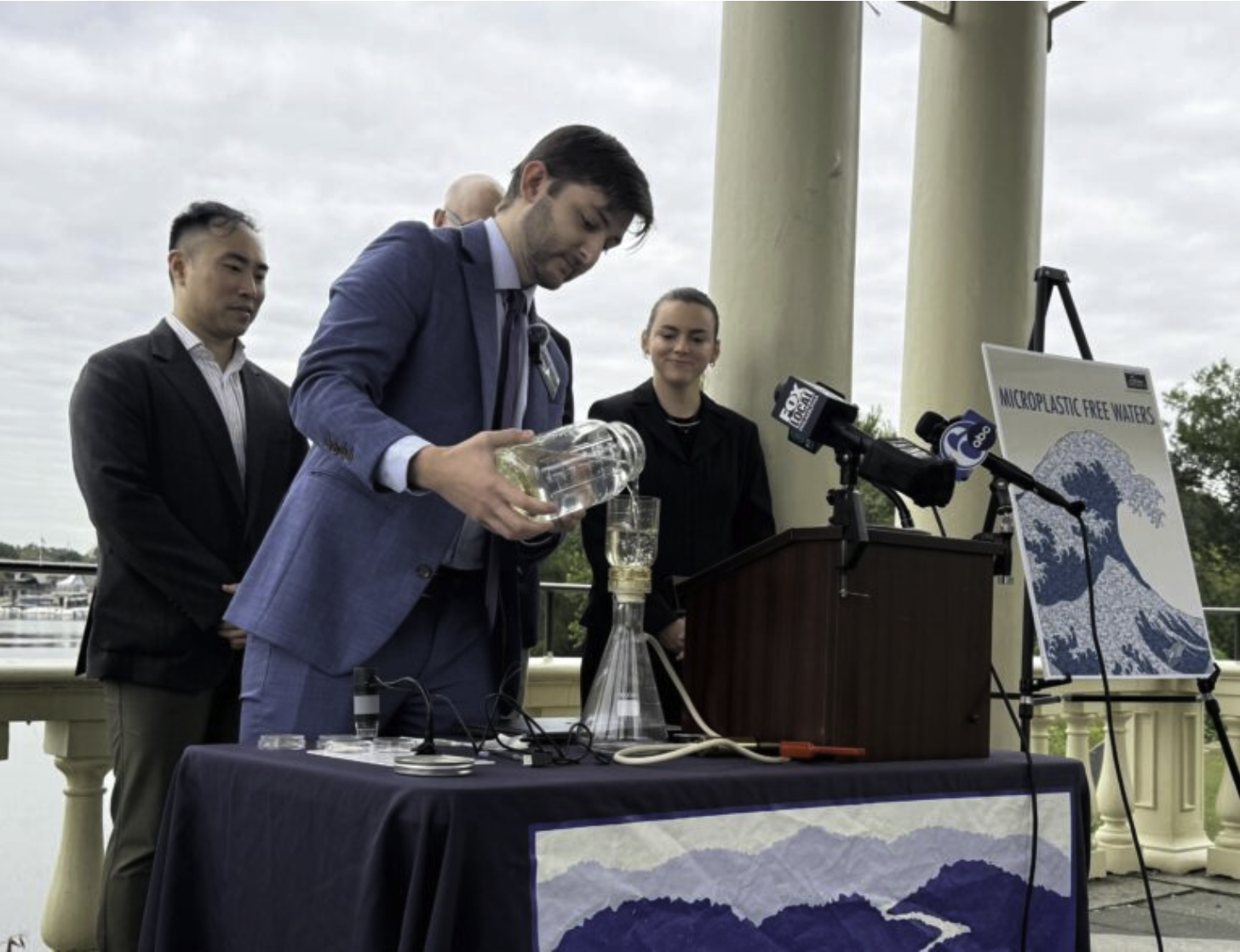
Photo by Zoë Read from WHYY
In 2010, about forty countries abstained from the United Nations vote to recognize access to water as a human right, and one of them was the United States. About one and a half decades later, the U.S. 5th Circuit Appeals recently echoed this sentiment in Sterling v. City of Jackson (2026), explicitly ruling that the Fourteenth Amendment’s Due Process Clause does not guarantee a constitutional right to clean or contaminant-free water. Even though the plaintiffs argued that the severe lead contamination and deprivation of clean water caused severe birth defects and plummeting intelligence levels among Black children, the court ruled that the Constitution does not guarantee such environmental safeguards for the public, nor a right to receive truthful information from government officials during a public health emergency.
Shortly after the court’s ruling, the PennEnvironment Research & Policy Center tested 22 distinct water sites within a single Delaware River Watershed to see if any of their samples contained traces of microplastics or plastic particles smaller than five millimeters. Previously, microplastics have already been linked to significantly impaired ovarian function, decreased fertility rates, and disrupted hormonal levels in women while elevating the risk of heart attacks and stroke across the general population. With the Delaware River supplying over 14 million Americans with drinking water, the investigators wanted to measure the true extent of this invisible yet deadly threat since it currently lacks any federal regulations.
Using samples across Delaware, New Jersey, New York, and Pennsylvania, the investigators identified four distinct types of microplastic contamination: fibers from synthetic clothing (found at 100% of sites), fragments from hard plastic litter (82%), film from bag and wrappers (77%), and microbeads from cosmetics (27%). They even discovered standard waste water treatment plants could not adequately filter out these pollutants, allowing them to flow freely into local water ways and straight into community drinking water supplies. According to PennEnvironment’s zero waste advocate Faran Savitz, “we can look at a waterway, and it might be free of litter, it might be free of visible plastic pollution, but that doesn’t necessarily mean it’s clean,” emphasizing that microplastics are still capable of infiltrating some of the most remote corners of the world, whether it is the peaks of Mount Everest or even the lowest depths of the Mariana Trench.
Even if PennEnvironment did not partner with Drexel University for those results, global research dating back to 2018 has routinely detected microplastics in tap water, sea salt, beer, and commercial bottled water brands, spanning domestic staples like Aquafina and Dasani to prominent international brands like Nestlé Pure Life and Gerolsteiner. About a year later, a landmark study performed by the U.S. Geological Survey revealed that 90% of rainwater samples collected across Colorado’s urban, rural, and remote alpine sites within the Rocky Mountain National Park were laced with microplastics. Individuals were not only ingesting microplastics through commercial water bottles, but they also consumed them through staple crops like corn and lettuce that have been routinely showered with microplastic contaminants.
As the longest undammed river in the eastern United States, the Delaware River homes more than 200 fish species and generates $21 billion in ecosystem goods and services each year. In spite of its economic and ecological significance, though, all of its waterways are littered with microplastics, prompting Savitz to conclude that “no river, no lake and no stream in the watershed is free from this contamination.” Because excessive coal mining and disposal of persistent toxic chemicals have recently exacerbated the microplastic problem, PennEnvironment recommends stricter producer responsibility mandates to hold manufacturers liable for waste management and plastic recycling. Even though Pennsylvania is the only state in the Delaware River region that has not yet banned single-use plastic bags statewide, its legislative inaction undercuts regional conservation efforts to resolve the ongoing microplastic crisis.
The recent decision by the U.S. 5th Circuit Appeals and the microplastic study carried out by PennEnvironment highlight how much worse both plastic and microplastic pollution have recently gotten. Not only did the legal system rule that citizens do not have a constitutional right to uncontaminated water, but current data also showed how microplastics invaded both the atmosphere and local vital waterways. If the US wants to reverse the trajectory back to the levels seen in 2000, around 213 million tons, to protect the public from an unregulated toxic hazard, it requires the producer responsibility mandates advised by PennEnvironment: reducing single-use plastics and packaging, tackling industrial plastic pellet pollution, and aggressively fighting textile waste. These mandates must focus on reducing the fossil fuel-to-plastic pipeline, defending against environmental rollbacks, and reforming broken recycling structures while standardizing infrastructure to filter out toxic contaminants from municipal water systems.