
~6.0 minute read
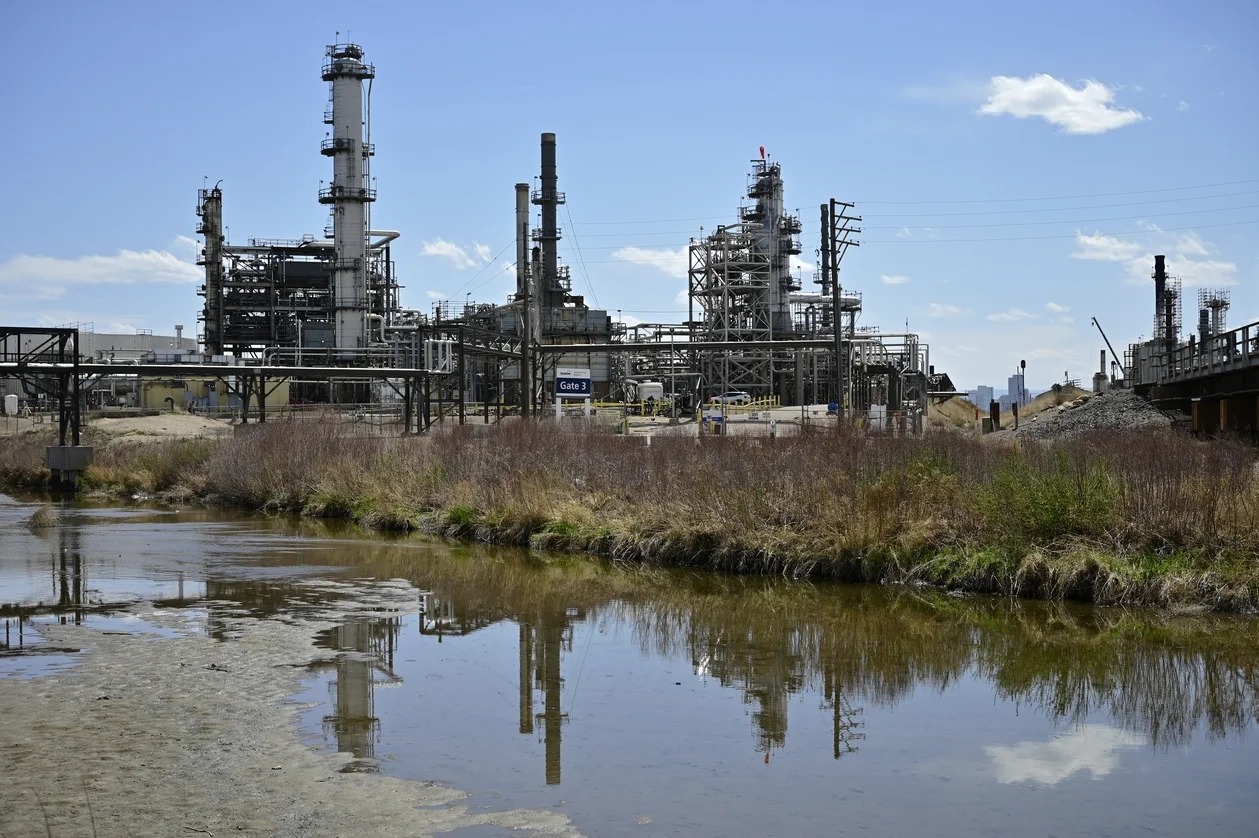
Photo by Hyoung Chang from Politico
Earlier this month, the US Supreme Court returned from its three-month long recess. But unlike previous term-opening dockets in the Court’s recent history, one of the US Supreme Court justices recused himself from the case. His name is Samuel Alito.
About eight years ago on April 17, 2018, the city and county of Boulder, Colorado filed a lawsuit against ExxonMobil Corporation and Suncor Energy. The people claimed that the multinational fossil fuel corporations misled the public about how their activities were worsening and accelerating the current climate crisis while forcing the public to experience severe respiratory and cardiovascular illnesses triggered by deteriorating air quality, acute heat strokes and systemic dehydration caused by unprecedented summer temperature spikes, and accelerated outbreaks of severe vector-borne diseases such as West Nile virus, hantavirus, and other tick-related diseases. Yet, Suncor Energy and ExxonMobil immediately attempted to transfer the case from the state-level Boulder County District Court to the U.S. District Court of Colorado, arguing that that the Clean Air Act completely preempted and foreclosed all climate-related complaints. Still, the plaintiffs fought to keep the trial local within Colorado’s state courts, knowing that state laws are more likely to hold mega corporations like Suncor Energy and ExxonMobil financially liable and accountable for their damages to the public. Even after the Boulder County District Court rejected Suncor’s motion, Suncor Energy turned to the Colorado Supreme Court to intervene on their behalf. Once this effort failed too, though, Suncor Energy eventually escalated the jurisdictional battle to the U.S. Supreme Court, leading to Suncor Energy Inc. v. County Commissioners of Boulder County.
Of the nine U.S. Supreme Court justices, though, Justice Samuel Alito recused himself from participating in the case because of his substantial private oil investments. Even though other U.S. Supreme Court justices also own private investment portfolios, Alito maintains a significant financial stake in the fossil fuel industry, none of which include the named defendants Suncor Energy or ExxonMobil. Had Justice Alito not recused himself, though, his involvement with the case would have presented a serious conflict of interest because justices must step down if they hold a financial interest that could be “substantially affected by the outcome” of a proceeding according to the Supreme Court’s 2023 Code of Conduct.
With Justice Alito removed from the court case, its decision is possibly split in a 4-4 deadlock between the court’s conservative majority and the liberal minority. Even though Justices Clarence Thomas, Neil Gorsuch, Brett Kavanaugh, and Amy Coney Barrett are expected to side with Suncor and ExxonMobil and Justices Sonia Sotomayor, Elena Kagan, and Ketanji Brown Jackson are likely to defend the plaintiffs, only Chief Justice John Roberts has the likely swing-vote power to either break the conservative supermajority or trigger a dead-even 4-4 deadlock that hands Boulder a backdoor default victory. Either Chief Justice Roberts can grant a sweeping liability shield that permanently immunizes these energy majors while sweeping away nearly 60 other pending multi-billion dollar state lawsuits, or the court officially authorizes local jurisdictions across America to drag other fossil fuel majors before local juries for similar systemic corporate deception. Currently, though, Chief Justice Roberts is skeptical about either side’s claim because he worries about the final outcome creating an unrealistic precedent for those lawsuits or leaving localized communities entirely defenseless against multi-billion-dollar climate destruction.
Regardless of the outcome, similar lawsuits from Hawaii to Rhode Island might experience a ripple effect since climate activists and municipal legal coalitions have long targeted ExxonMobil for being the US’s biggest oil producer, potentially elevating the case to be both a landmark case and a watershed moment for corporate accountability and the future of global climate litigation. Yet, the plaintiffs face an uphill battle because ExxonMobile has consistently won several court cases regarding climate liability and federal environmental regulation for the past two decades with President Donald Trump supporting the defendants and the swift deregulation of the fossil fuel industry. Still, the plaintiffs’ attorneys Kevin Russell and Marco Simmons remain optimistic about the case’s ultimate trajectory, pointing to Russell’s high-profile 2024 Supreme Court victory over Shanmugam in a landmark social media case and Simmons representing Boulder’s litigation since 2018.
By hauling two major fossil fuel corporations into local courts for systemic consumer deception, Boulder, Colorado can possibly bypass a gridlocked federal system to directly force Suncor Energy and ExxonMobil to financially absorb the staggering costs of their climate destruction rather than sticking the taxpayers with the bill. Boulder’s lead attorney, Kevin Russell, argues that despite the companies’ efforts to evade local accountability, “this case is not about emissions. It’s about deception and about producers.”, reminding the justices of the corporate defendants’ decades-long campaign to actively mislead the public about the environmental and health impacts of their fossil fuels. Russell specifically pointed to the current climate crises caused by these companies such as the extreme heat waves, deteriorating air quality, and accelerated frequency of local outbreaks that Colorado residents are forced to confront daily. Utilizing state tort laws to weaponize local consumer rules, the plaintiffs seek to establish that climate destruction is no longer an abstract global threat when it causes immediate, measurable harm to human survival and community infrastructure.