
Energy Fuels’ Uranium Expansion into Tribal Lands
~4.5 minute read
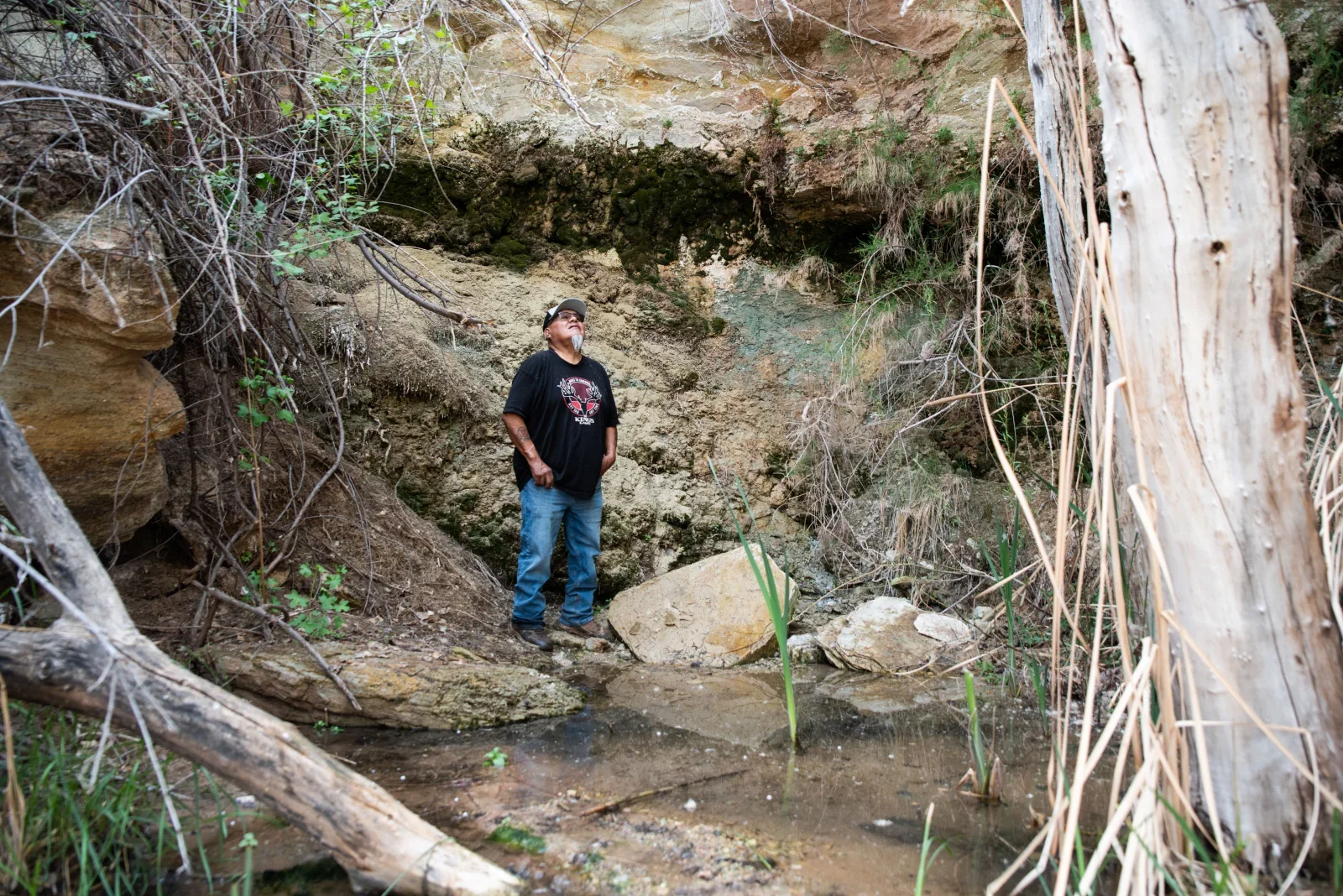
Photo by Melissa Bailey from KFF Health News
A few months before President Trump started his second presidential term, former president Biden banned the import of Russian uranium to sever economic ties with the country while reviving the US’s nuclear fuel production using the $2.72 billion appropriated by Congress. Former president Biden signed the Prohibiting Russian Uranium Imports Act believing that it would push America closer towards a cleaner, safer, and more secure energy economy. Unlike fossil fuels, nuclear reactors powered by uranium can generate significantly more energy without emitting excess greenhouse gases, making it a more attractive and climate friendly alternative to carbon. Yet, President Trump recently announced plans to aggressively quadruple the US nuclear capacity by 2050, whether by fast tracking approvals or prioritizing uranium mining on federal lands like the Velvet-Wood uranium mine in Utah, which only took fourteen days to approve. Unlike former president Biden, though, President Trump is not concerned with the ongoing climate change crisis. According to the U.S. Department of Energy, the Trump administration signed a sweeping package of executive orders specifically prioritizing the deployment of advanced nuclear reactors to power the nation’s AI data centers.
Not only did these orders green-light an unprecedented wave of fast-tracked extraction on federal lands, but they also allowed Utah’s White Mesa Mill, the nation’s last conventional uranium milling facility, to dramatically ramp up its industrial processing capacity under Energy Fuels, one of the nation’s largest uranium producers. To sustain its operations alongside raw mining, the White Mesa Mill exploits a controversial regulatory loophole known as alternate feed processing where it imports low-level radioactive waste and industrial sludge from across the globe to chemically extract residual trace uranium while permanently burying massive volumes of remaining toxic leftovers in local tailings ponds.
Living directly across the White Mesa Mill, though, are the Ute Mountain Ute, Navajo, and the Havasupai tribes. During the Southwest’s original uranium boom from 1944 to 1986, Navajo underground miners suffered an epidemic of radiation-induced lung cancer and other respiratory diseases while federal authorities quietly documented the health risks without warning or notifying the workers. About 35 years later, the Ute Mountain Ute tribe took a legal stand by enacting the Ute Mountain Ute Tribal Council Resolution No. 2021-135, declaring that the White Mesa Mill’s operations “[have] had severe health impacts on the residents of White Mesa and should cease entirely.” Later that same year, the EPA independently documented the White Mesa Mill violating the Clean Air Act for failing to restrict its emissions of radon, which is a toxic, radioactive gas known as a leading cause of lung cancer. Rather than halting operations to address the public health hazard, Energy Fuels exploited another regulatory loophole by challenging the EPA’s testing methodology, allowing the mill to continue its processing schedule while stalling federal enforcement with corporate lawyers. Since domestic uranium operations have historically dismissed the health concerns of the Navajo, Havasupai, and the Ute Mountain Ute nations, local advocates from the White Mesa Concerned Community remain deeply skeptical of the corporate expansion. Yolanda Badback, a prominent leader of the White Mesa Concerned Community from the Ute Mountain Ute tribe, explicitly stated that she does not trust Energy Fuel’s intentions. Instead, she wants White Mesa Mill shut down entirely, warning that “they want to expand south towards my reservation.”
Still, Energy Fuel’s senior vice president of corporate development Curtis Moore believes that these Indigenous communities are overexaggerating how much White Mesa Mill currently impacts their health because its workers today are only exposed to 15-20% of allowable radiation limit. Even then, those outside of the mill should experience “effectively zero” radiation levels. Other community members like Teracita Keyanna, though, question why the US government feels like she, her children, and her grandchildren are “disposable” when they are not.
Since the past Clean Air Act litigation launched by Grand Canyon Trust was ultimately dismissed by federal courts in favor of Energy Fuels, there are no active or pending lawsuits to block the company’s real-time expansion into Utah and possibly two more uranium mining sites: Colorado’s Whirlwind Mine and Wyoming’s Nichols Ranch project. If Energy Fuels moves forward with them, this will worsen the environmental strains facing the Navajo, Ute Mountain Ute, and the Havasupai tribes. Additionally, it will introduce similar issues for the Eastern Shoshone, Northern Arapaho, and Northern Cheyenne tribes while possibly setting a dangerous precedent that Indigenous human rights are entirely disposable. Because of this, tribal communities are worried that the renewed interest in uranium milling and mining near their communities will harm their health again.
Even though Energy Fuels’ bid to expand nuclear reactors across America threatens Indigenous tribes’ right to sovereignty, clean drinking water, and ancestral land preservation, those same reactors can also significantly help reduce the nation’s reliance on coal and liquefied natural gas plants that currently power corporate technological grids, expanding AI data infrastructure, and the modern industrial economy. When cleaner national technological expansion requires fast-tracking extraction over tribal borders and overrunning basic human rights, though, it reveals a deeply hypocritical federal infrastructure strategy. It claims to prioritize former President Biden’s vision for a cleaner energy economy while disregarding the human rights and public health of neighboring Indigenous tribes.