
The Corporate Campaign Against America’s Wildlands
~3.0 minute read
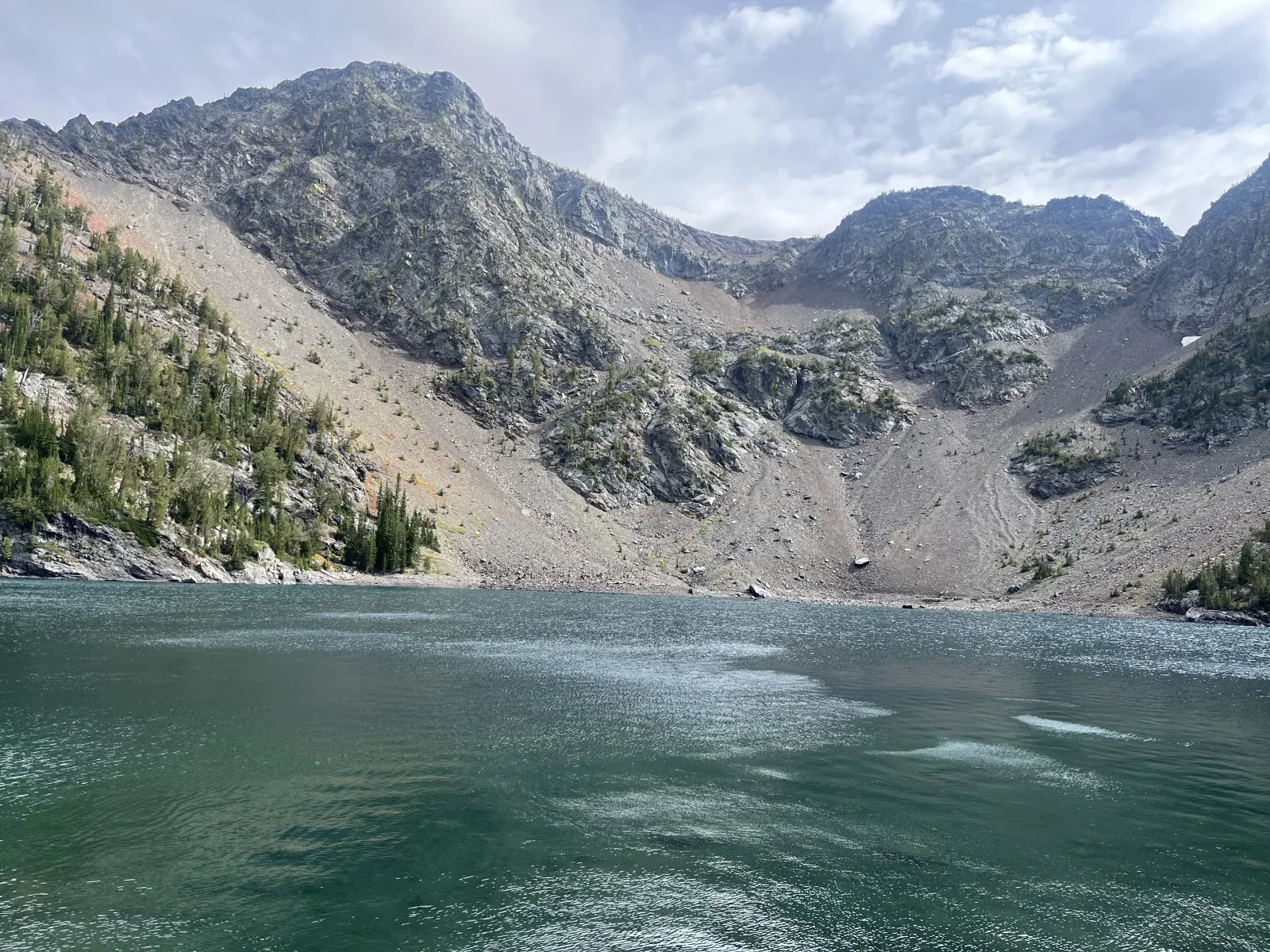
Photo by Kirk Siegler from NPR
For the past 25 years, nearly 60 million acres of forest, grasslands, and wildlands have been protected from roadbuilding and logging under the Clinton administration’s 2001 Roadless Area Conservation Rule or the 2001 Roadless Rule. Yet on August 18, Secretary of Agriculture Brooke L. Rollins recently announced plans to rescind it under President Trump’s orders. With President Trump claiming that increased logging and thinning of the forests will reduce wildfire threats and Secretary Rollins believing that this move will give federal power back to the states, Republican states such as Alaska, Idaho, Utah, and Wyoming have generally applauded this change. Over the past two decades, these states have repeatedly argued in federal court that forest management decisions regarding the nearly 60 million acres of federally protected forest land should belong to local governors and state assemblies. They contend that former President Bill Clinton’s blanket environmental rule long abused federal power. Even Utah’s governor Spencer J. Cox remarked that, “Rescinding [the 2001 Roadless Area Conservation Rule] restores the flexibility to make thoughtful decisions based on the needs of each forest and each community,” with Wyoming’s governor Mark Gordon adding that “this step reflects a commitment to locally-driven, durable planning and empowering those who know these lands the best.”
Long before the Trump administration started dismantling the 2001 Roadless Rule, President Bill Clinton sought to finalize it a week before President George W. Bush took the presidential office to prevent the former incoming Bush administration from targeting 58.5 million acres of forested land for commercial logging, mining, and drilling. Despite the Rule facing several legal challenges from the Bush White House and other Republican leaders, it eventually went into effect on December 12, 2001. Under the 2001 Roadless Rule, not only did 25 million Americans have access to clean drinking water supplies, but about 25% of all threatened and endangered species lived on federally protected lands. Specifically, those living in Alaska, Arizona, California, Montana, Nevada, New Mexico, Oregon, Utah, Washington, and Wyoming experienced preserved forests, healthier ecosystems, and cleaner air while the Indigenous communities in those same states had reliable access to traditional food gathering, religious and cultural practices.
In spite of these successes, though, President Trump repeatedly attacked the 2001 Roadless Rule through a series of executive orders from EO 14154 “Unleashing American Energy” to EO 14225 “Immediate Expansion of American Timber Production”, resulting in the US Department of Agriculture’s repeal proposal filed on August 18, 2026. Even though public comments about rescinding the 2001 Roadless Rule recently closed on September 21, several conservation advocacy groups like Earthjustice and the National Wildlife Federation have argued that if the Trump administration does not reconsider handing over protected trees to timber and extractive industries, it will be met in court. Because the proposal to repeal the 2001 Roadless Rule has not yet been finalized and published in the Federal Register, environmental organizations such as Earthjustice have not been able to file lawsuits challenging the repeal.
After the 2020 Alaska Roadless Rule was repealed on January 27, 2023, “one exceedingly small sector of Alaska’s economy [benefitted] at the expense of thriving industries like tourism and fishing”. If the 2001 Roadless Rule is completely dismantled, only federally protected forests in Colorado and Idaho would be left untouched since their state roadless rules and forest management guidelines precede the original national ban on logging and industrial road construction.